
How Do Identity Thieves Get My Information?
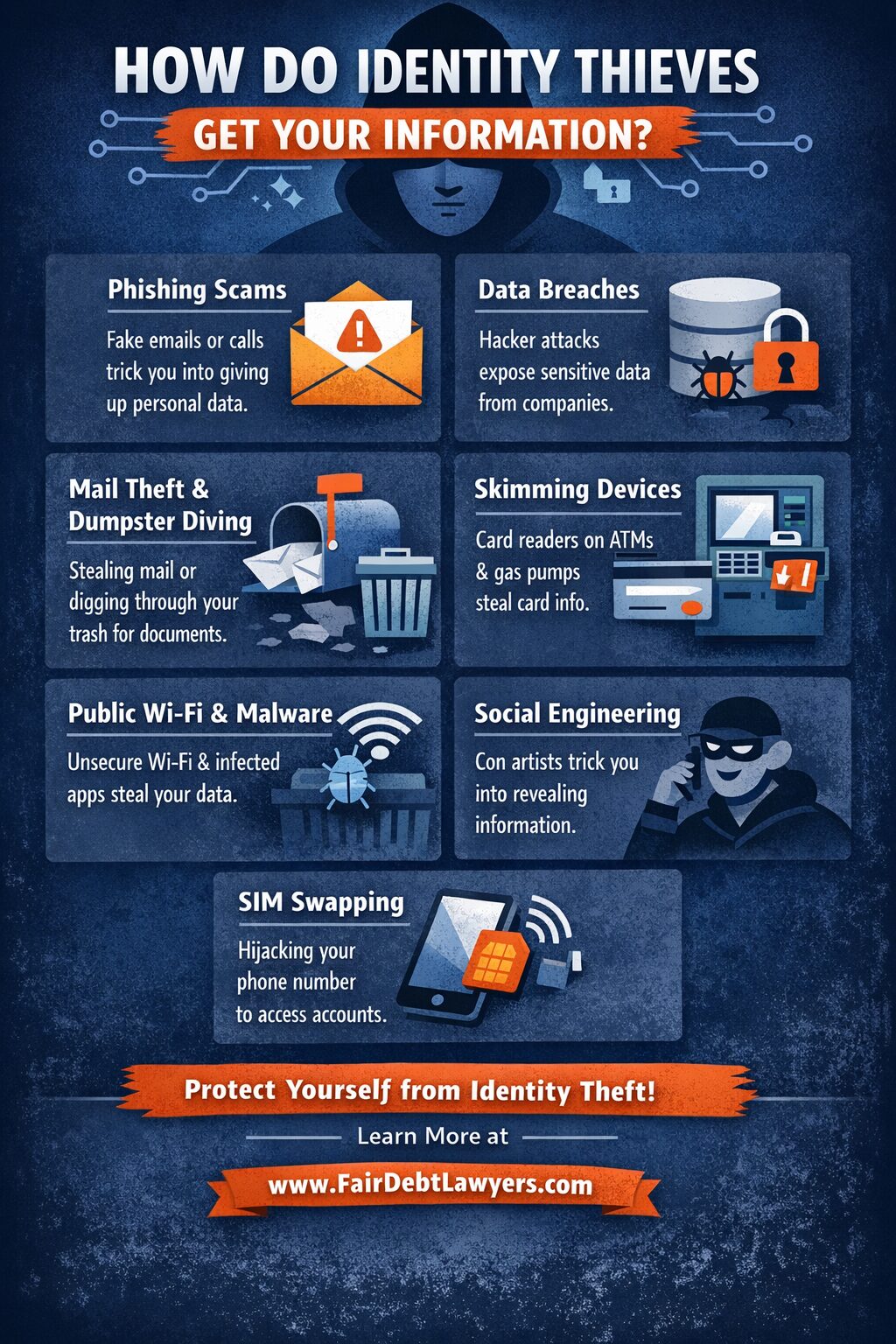 Identity thieves use a variety of methods — both online and offline — to obtain your personal information. Some techniques rely on technology and cyberattacks, while others exploit everyday situations like mail delivery and public Wi-Fi. Understanding these common tactics can help you better protect yourself and recognize signs of compromise early. Here are the common ways that identity thieves can get access to your information:
1. Phishing & Spoofing Scams
Phishing involves fake emails, text messages (smishing), or phone calls (vishing) designed to trick you into revealing sensitive information like login credentials, Social Security numbers, or credit card details. Criminals often pose as trusted companies, banks, or even government agencies.
2. Data Breaches & Hacks
Large-scale data breaches — where criminal hackers access company or government databases — can expose millions of users’ personal details at once. Once breached, this information is often traded on the dark web or used directly for fraud and account takeovers.
3. Mail Theft & Dumpster Diving
Thieves may steal mail from your mailbox or sift through your trash (a practice called “dumpster diving”) looking for account statements, pre-approved credit offers, or other documents that contain identifying information.
4. Skimming Devices
Skimming involves placing hidden card readers on ATMs, gas pumps, or point-of-sale devices to capture credit/debit card numbers and PINs when you swipe or insert your card.
5. Public Wi-Fi & Malware
Using unsecured public Wi-Fi can let criminals intercept data you send over the network. Malware and malicious apps installed through deceptive downloads or infected links can also collect passwords, banking information, and other sensitive details from your devices.
6. Social Engineering
Criminals sometimes exploit human psychology — calling or messaging you while pretending to be someone you trust — to extract personal data. They may pressure or trick you into confirming your identity, account details, or security questions.
7. Inside Sources & Public Records
In some cases, identity thieves obtain information from inside sources — including dishonest employees who access databases or records — or from public records that contain personal identifiers.
8. SIM Swap & Other Account Takeovers
Advanced scams like SIM swap attacks target your mobile phone account to gain control of your text messages or authentication codes, enabling criminals to reset passwords and access your accounts.
Why These Methods Matter
Each method targets data that can be used to impersonate you, open new accounts, make unauthorized purchases, or access your financial and medical records. Often, criminals combine multiple tactics — such as phishing to get a password and then using public Wi-Fi to exploit it — to maximize their access.
Knowing how identity thieves work helps you spot suspicious behavior sooner, safeguard key accounts, and act quickly if you suspect your information has been compromised.
What to Do If Your Information Is Stolen
If you believe your personal information has been accessed:
- Report the incident and file a report with the FTC at IdentityTheft.gov.
- Contact your bank and credit card companies to secure or freeze accounts.
- Place a fraud alert or credit freeze with the major credit bureaus.
- Consider legal help — a consumer protection attorney can assist with resolving fraud and disputing unauthorized accounts.
For the first steps you should take after suspected identity theft, see The Ultimate Step-by-Step Guide: What To Do After Your Identity Has Been Stolen. You can also contact Vullings Law Group, LLC today to take charge of your legal issue.
